McDonald's must face McRib lawsuit: what the judge said about rib meat
A federal judge in Chicago ruled on October 30, 2026 that McDonald's must face a lawsuit claiming the McRib's name and shape wrongly suggest it has rib meat.
The essentials: A federal judge in Chicago ruled on October 30, 2026 that McDonald’s must face a lawsuit claiming the McRib misleads customers into expecting rib meat, Reuters reports. Judge April Perry dismissed some claims but refused to throw out the case. She did not decide whether McDonald’s deceived anyone, only that the argument can go forward. The company calls the suit meritless.
What did the judge decide?
McDonald’s had argued that no reasonable consumer could expect a McRib to contain rib meat. Judge Perry found it premature to accept that view at this stage. “Plaintiffs’ proffered understanding of ‘McRib’ is not unreasonable or fanciful,” she wrote, according to Reuters.
The judge noted that the company’s website describes the sandwich only as containing pork, and said reasonable consumers do not have to do research before buying a $7 fast-food sandwich. She added that advertising highlighting the meat’s rib-like shape could support a claim of intent to defraud, though more proof would be needed.
Reuters does not say which claims were dismissed. The ruling is not a finding of liability, and no trial date has been reported.
What does the lawsuit claim?
The complaint was filed on December 23, 2025 in the US District Court for the Northern District of Illinois, on behalf of four plaintiffs, USA Today reported. It includes 16 claims, among them fraud and breach of contract, and invokes consumer protection laws in Illinois, California, New York and Washington, DC, according to Business Insurance.
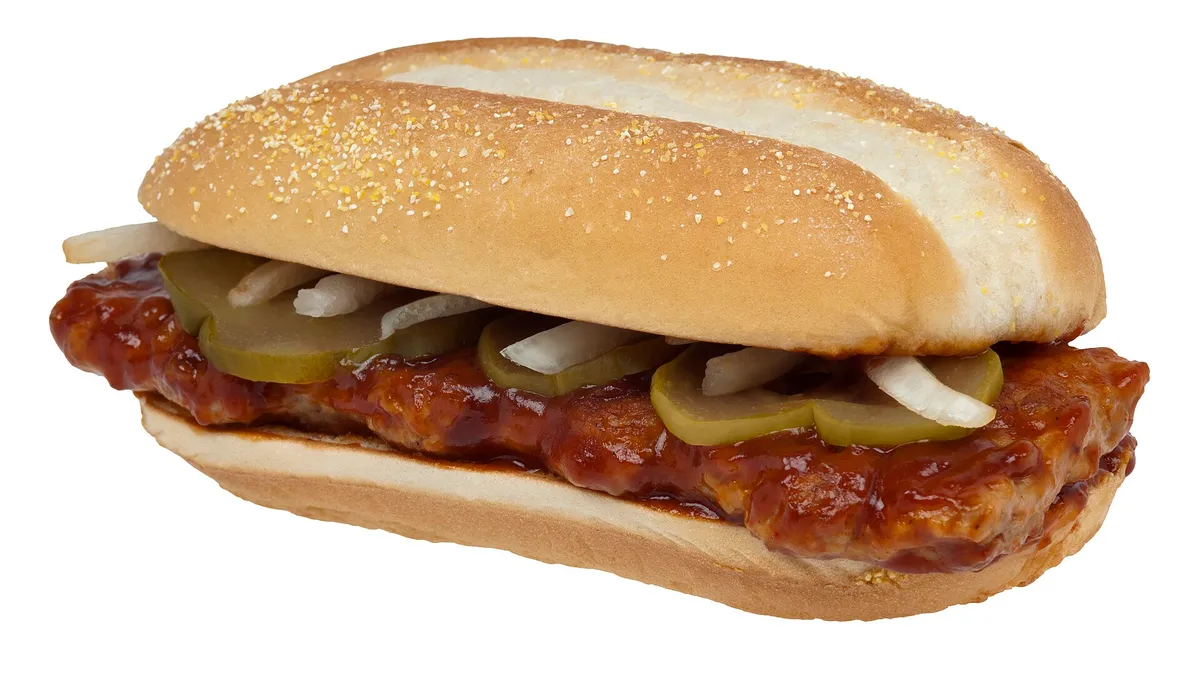
The central argument is that the name and the ridged, rack-like shape of the patty lead people to overpay. The plaintiffs say it is made instead from lower-grade pork, such as shoulder, heart, tripe and scalded stomach. They call the name “a deliberate sleight of hand”, Fox Business reported.
To support the claim, the complaint cites two consumer surveys described by USA Today. In one, 72% of 215 respondents said they expected the McRib to include rib meat. In the other, 67% of 174 respondents said rib meat was important or very important to their decision to buy.
The plaintiffs are seeking damages, attorneys’ fees and interest, as well as a court order stopping what they describe as deceptive naming and marketing.
How has McDonald’s responded?
| Point in dispute | Plaintiffs | McDonald’s |
|---|---|---|
| Rib meat | The sandwich contains none, despite its name | Distinctive product names do not fool reasonable consumers |
| Ingredients | Shoulder, heart, tripe and scalded stomach | 100% pork, with no hearts, tripe or stomach in the patty |
| Marketing | The name and shape are designed to mislead | A preference for one cut of pork does not make its marketing fraud |
Sources: Reuters, Fox Business, USA Today.
In court, McDonald’s argued that the plaintiffs’ preference for a certain cut of pork “doesn’t turn McDonald’s truthful marketing into consumer fraud”, Reuters reports. In a statement after the ruling, it said it has always been transparent about its ingredients. “This lawsuit distorts the facts and the claims are meritless,” it added.
The plaintiffs’ lawyer, Thiago Coelho, said his clients would keep seeking accountability for deceptive marketing, according to Reuters.
Why does the McRib attract so much attention?
The sandwich has been sold on and off since 1981, which is part of its appeal: it comes back for limited periods rather than staying on the menu. USA Today dates its first withdrawal to 1985, followed by a long return and a “farewell tour” between 2005 and 2007, then later comebacks.
The plaintiffs turn that history against the company. They argue that the misleading attributes are what drive sales, and explain why McDonald’s keeps bringing the sandwich back, according to the complaint quoted by USA Today.
The case now moves to the next stage in Chicago, where the plaintiffs will have to back up what the judge has so far only accepted as plausible.
This article was prepared with the help of AI tools from the sources listed above, then reviewed by our editors before publication. Read our editorial policy