100 years after Houdini's death: what killed him, and why Detroit still remembers
Harry Houdini died in Detroit on October 31, 1926. The official cause was a ruptured appendix, but the punches he took in Montreal still divide historians.
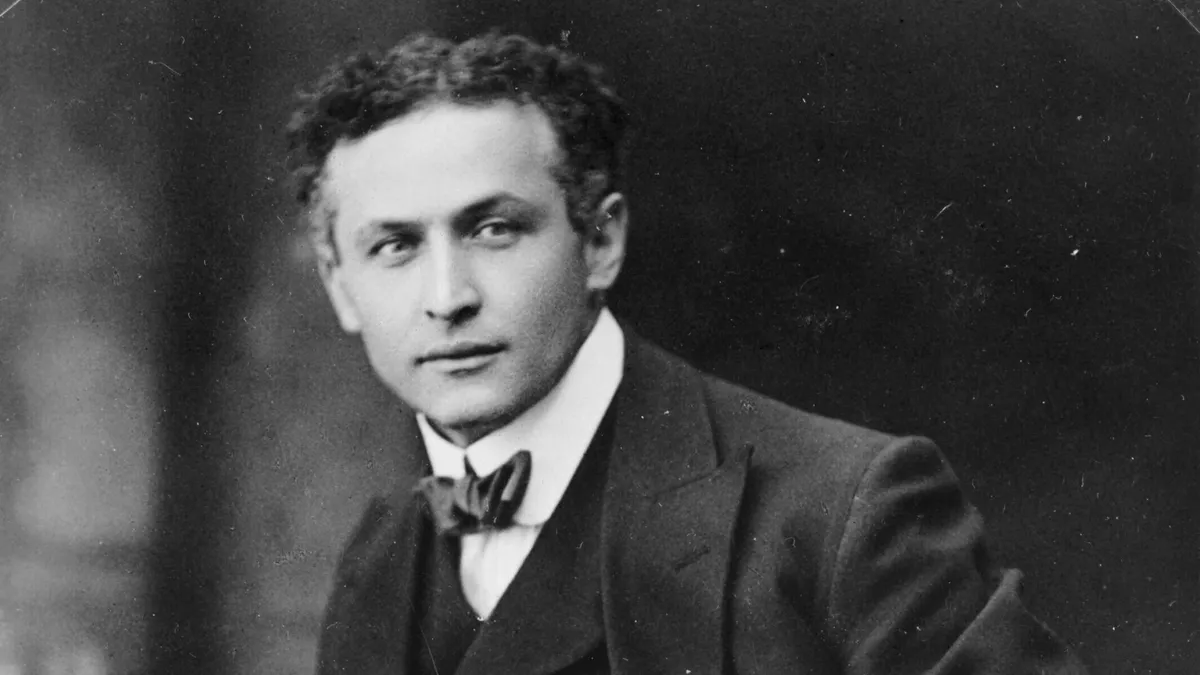
The essentials: Harry Houdini died at Detroit’s Grace Hospital on October 31, 1926, aged 52, a week after his last show at the city’s Garrick Theatre. The official cause was peritonitis from a ruptured appendix, but a century later historians still debate whether punches he took in Montreal days earlier played a part. The Detroit Historical Museum is marking the anniversary with an event on October 31, 2026.
What happened in Houdini’s last days?
| Date (1926) | Event |
|---|---|
| October 11 | In Albany, New York, faulty equipment strikes his leg during the Chinese Water Torture Cell; a fractured left ankle is found later |
| October 22 | In Montreal, McGill student J. Gordon Whitehead punches him in the abdomen in his dressing room at the Princess Theater |
| October 23-24 | He travels overnight to Detroit and refuses a doctor’s advice to go to hospital |
| October 24 | Final performance at the Garrick Theatre, with a fever of 104 degrees; he is taken to Grace Hospital that night |
| October 31 | He dies in Room 401 of Grace Hospital |
| November 4 | Burial in Queens, New York |
Sources: History.com, ClickOnDetroit, CBS Detroit.
The Montreal encounter began as a challenge. According to CBS Detroit, the student tested the strength of Houdini’s stomach muscles and hit him before he could tighten them. History.com quotes a witness, Sam Smilovitz, who described “four or five terribly forcible, deliberate, well-directed blows”. Houdini still performed four more shows in Montreal.
Why did he go on stage in Detroit? ClickOnDetroit points to showmanship and to a contract clause that would have cost him $1,000 for every night the Garrick went dark.
“At this point, he has a 104-degree fever. He has chills. He’s aching all over the place,” said Jeremy Dimick, director of collections and curatorial at the Detroit Historical Museum.
Accounts of that night differ. CBS Detroit says he collapsed after the first act, History.com says immediately after the final curtain, and a nurse travelling with him recalled him collapsing on a couch during the intermission, according to ClickOnDetroit.
What was the official cause of death?
History.com gives it as peritonitis caused by a ruptured appendix. Surgeons removed the appendix, which had burst days earlier, but the infection had already spread. His wife Bess and his two brothers were at his side when he died. His death certificate is now held by the Archives of Michigan.
Did the punches kill him?
This is the question that has lasted. Doctors at the time believed the blows caused the illness, a condition known as traumatic appendicitis, which History.com calls extraordinarily rare. Houdini’s life insurer accepted the argument and paid his widow double indemnity for accidental death.
Many writers now take a different view: the punches may not have caused the appendicitis, but they may have led him to ignore an appendicitis that was already there.
Was Houdini murdered?
Some authors have gone further. In The Man Who Killed Houdini (2005), Don Bell asked whether Whitehead might have been linked to the Spiritualists Houdini spent years exposing, before concluding the evidence was too thin. William Kalush and Larry Sloman, in The Secret Life of Houdini (2006), noted that no autopsy was performed. “If someone were hell-bent on poisoning Houdini, it wouldn’t have been very difficult,” they wrote.
Most scholars, History.com says, dismiss the murder theories as speculation.
Why does Detroit still matter to the story?
Houdini knew the city well. “He performed here 19 times between 1894 and, of course, his last show in 1926,” Dimick told ClickOnDetroit.
The places remain part of the legend: Michigan Central Station, where he arrived and from where his body left, the Garrick Theatre, which Dimick says is “kind of forgotten today”, and the former Hamilton funeral home on Cass Avenue, now vacant.
The story did not end with the funeral. For ten years, Bess Houdini held a séance every Halloween, waiting for a secret phrase the couple had agreed on and for a special pair of handcuffs to open. No contact came, and she gave up in 1936.
The Detroit Historical Museum will host its centenary event on the anniversary itself.
This article was prepared with the help of AI tools from the sources listed above, then reviewed by our editors before publication. Read our editorial policy