SpaceX catches Starship's upper stage for the first time: what Flight 15 achieved
On 14 November 2026 the Starbase launch tower caught Ship 42 after 14 orbits and about 22 hours in space. The booster was lost. What Flight 15 means.
Published
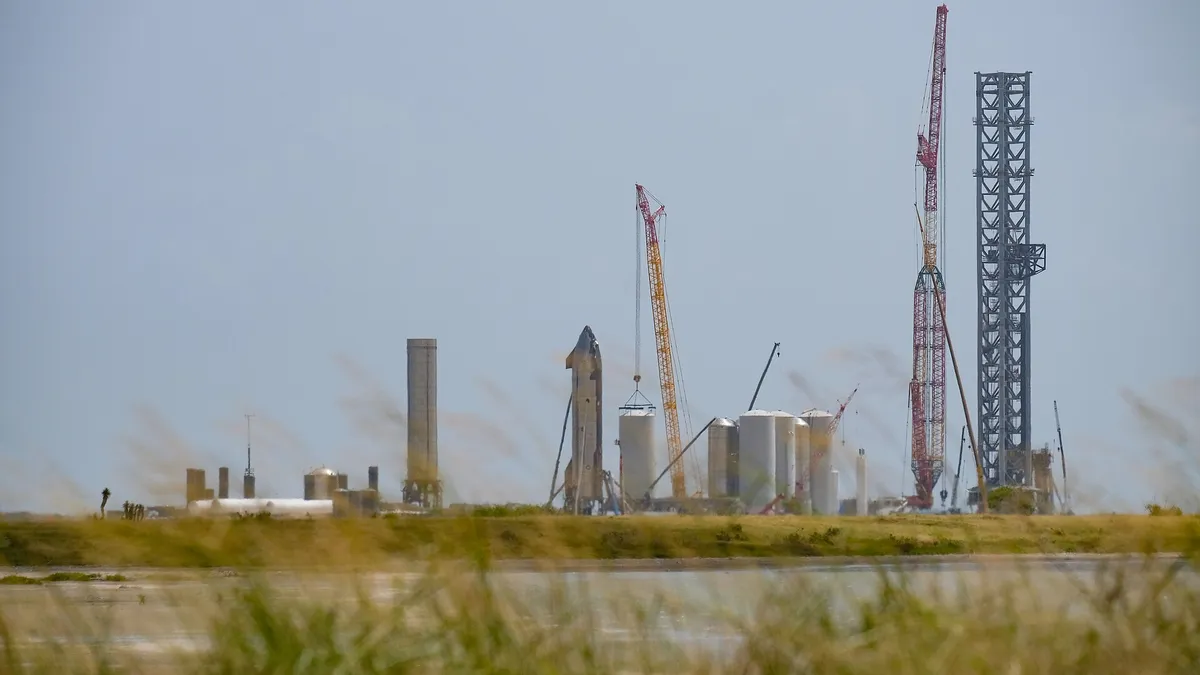
The essentials: SpaceX caught the upper stage of its Starship rocket with the arms of its launch tower on Saturday 14 November 2026, the first time a spacecraft returning from orbit has been recovered that way. Ship 42 came back to Starbase, Texas, after 14 orbits and about 22 hours in space. The flight was only a partial success: the Super Heavy booster missed its own catch and exploded over the Gulf of Mexico.
What happened on Flight 15?
Starship lifted off from Starbase at 4:47pm Central time on Friday 13 November (22:47 UTC), according to Spaceflight Now. It was the 15th integrated test flight and the first on which SpaceX tried to catch both stages of the rocket.
The upper stage, Ship 42, reached orbit and released 26 Starlink V3 satellites. It then circled the Earth 14 times at an altitude of roughly 265 kilometres, EarthSky reports, before firing its engines to come home.
At roughly 3:20pm Central on Saturday (21:20 UTC), the ship descended through overcast skies over Boca Chica, hovered, and settled between the tower’s mechanical arms at Launch Pad 2. SpaceX calls the arms “chopsticks” and the tower “Mechazilla”.
| Milestone | Detail |
|---|---|
| Lift-off | Friday 13 November 2026, 4:47pm CST (22:47 UTC), Starbase, Texas |
| Booster | Super Heavy Booster 22, diverted and lost over the Gulf of Mexico |
| Payload | 26 Starlink V3 satellites released |
| Orbits | 14, at roughly 265 km |
| Ship catch | Saturday 14 November 2026, about 3:20pm CST (21:20 UTC), Pad 2 |
| Time from lift-off to catch | About 22 hours |
What went wrong with the booster?
Super Heavy Booster 22 was due to fly back to the pad about six and a half minutes after launch. Instead it was diverted to an offshore splashdown and exploded before reaching the water, Spaceflight Now and CNBC report.
SpaceX has not given a cause. Company commentator Dan Huot said during the live coverage that the guidance software triggered the abort as designed, but was not the source of the problem. “It was not a GNC issue that caused us not to come back,” he said, referring to guidance, navigation and control.
The outcome reverses the usual pattern. SpaceX has caught Super Heavy boosters on earlier test flights, but had never brought a ship back to the tower.
Why does catching the ship matter?
Starship is designed to be fully and rapidly reusable. Recovering the ship at the launch site, without landing legs, is the step that would let SpaceX refly the whole vehicle.
EarthSky notes that dropping heavy landing legs in favour of tower catches is central to that goal, which the company sees as essential for cutting launch costs. CNBC adds that a single Starship can carry up to 60 Starlink V3 satellites, according to SpaceX, compared with the 26 flown on this test.
NASA is watching closely. The agency expects to use a version of Starship to carry astronauts between lunar orbit and the surface of the Moon under its Artemis programme. NASA Administrator Jared Isaacman called the catch “almost magic”, according to EarthSky.
The flight comes as other space powers push their own reusable systems. We looked recently at China’s Shenlong spaceplane and what a rare photograph revealed about it.
Did the flight cause disruption on the ground?
Yes, briefly. Hawaii’s Department of Transportation paused some West Coast flights on Friday because of the risk of falling debris, CNBC reports. The order has since been lifted. Separately, the FAA ordered a nationwide ground stop the same day because of a telecommunications failure.
What comes next?
Elon Musk, the company’s chief executive, posted a video of himself inspecting Ship 42 on the tower after the catch. The re-entry was also a test of the ship’s upgraded heat-shield tiles, EarthSky notes.
The booster failure will need explaining first. Until SpaceX can catch both stages on the same flight, the fully reusable rocket it has promised remains a work in progress.