UK 'Be Ready' campaign: why households are told to keep three days of supplies
The UK government wants every household to cope for three days without power, water or internet. Shops report a rush on bottled water, tins and torches.
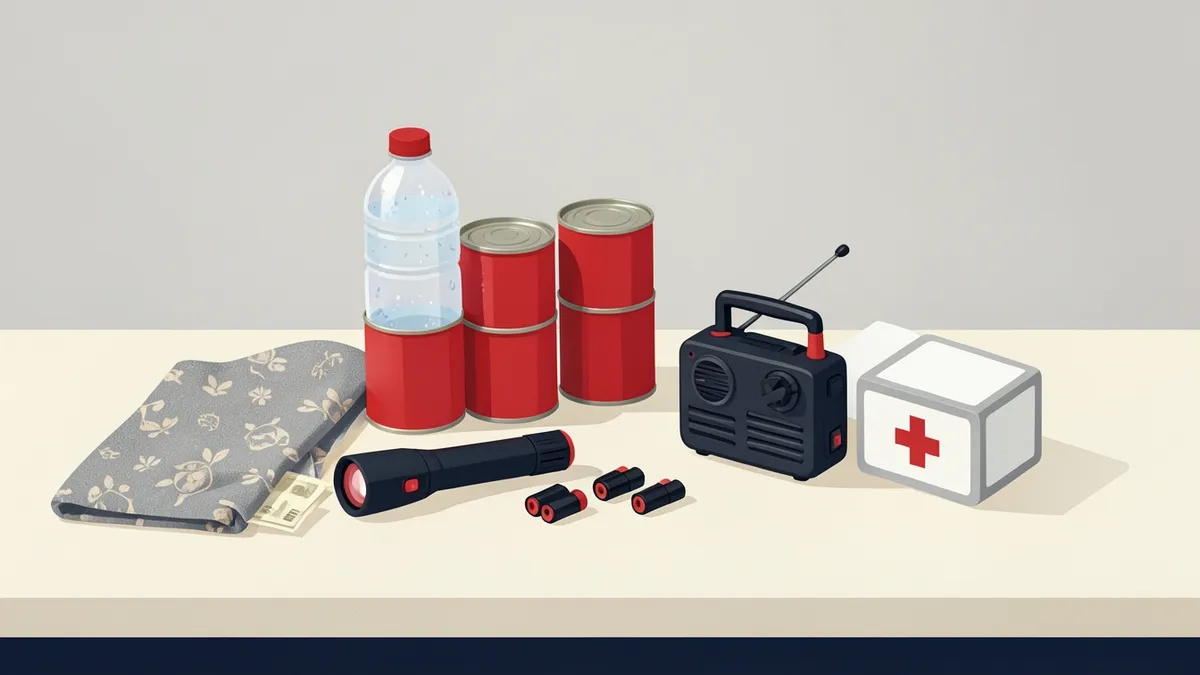
The essentials: On October 22, 2026, the Cabinet Office launched “Be Ready”, a campaign asking every household in the UK to be able to manage on its own for three days if power, water, phone or internet services fail. Within days, retailers reported sharp rises in sales of bottled water, tinned food, torches and radios, and “panic buying” became one of the most searched terms in Britain.
What exactly is the government asking?
The campaign website says that “being ready for 3 days helps you manage while support reaches those in need”. It cites emergencies ranging “from severe weather to cyber attacks”. According to the UK Defence Journal, the downloadable checklist covers nine categories:
| Category | Examples from the checklist |
|---|---|
| Water | 3 litres of drinking water per person per day, plus extra for cooking and washing |
| Food | Non-perishable food that needs no fridge or cooking |
| Light and information | Torch with spare batteries, battery or wind-up FM radio |
| Power and money | Charged power bank, cash in coins and notes |
| Documents | Copies of ID and a list of important phone numbers |
| Health | First aid kit and essential medication |
| Warmth | Blankets, sleeping bags, warm clothing |
| Family needs | Ready-to-feed baby formula, nappies, pet food |
The government advises building the kit gradually during normal shopping and checking expiry dates every six months. The site also points people who may need extra help during an outage to the Priority Services Register. Scotland and Northern Ireland publish their own versions of the advice.
Why now?
Security Minister Dan Jarvis said the move “brings the UK into line with many of our European peers”, according to The National. France, Ireland and the Netherlands already use a three-day message, the UK Defence Journal reports. Jarvis also pointed to recent events: “The storms last winter and the wildfires this summer have shown how severe weather events can cause disruption.”
The National lists the risks mentioned by ministers: bad weather, drought, flooding, artificial intelligence and hostile activity from Russia and Iran. Concern about infrastructure has grown in recent weeks, including over Russian trawlers seen near undersea cables.
The campaign is the first stage of a three-year programme, and more than 500 organisations have agreed to share its materials. The new site replaces a version launched in 2024.
Did the advice cause panic buying?
Retailers say demand jumped. According to The National:
- Iceland reported tinned food sales up 40% in a few days.
- Maplin said torch sales nearly quadrupled and radio sales almost doubled within three days of the announcement.
- Preppers Shop UK reported a 650% rise in sales of off-grid equipment.
- Several types of bottled water were unavailable on Ocado.
The retail industry had warned of this risk. “Panic buying is quite easy to generate, particularly if you tell people to buy a particular type of product,” Jim Bligh of the British Retail Consortium told The National. Defence Secretary Wes Streeting told BBC Newsnight it was “encouraging that people are taking practical steps”.
Is the government telling people to stockpile?
The advice is a recommendation, not an order. It does not ask people to buy large quantities. Ministers say those who can follow it should build up a small kit over time. Sky News reported that resilience campaigners welcomed the update but had expected a more prominent launch. It noted that Nordic and Baltic governments speak more bluntly to their citizens about emergencies.
This article was prepared with the help of AI tools from the sources listed above, then reviewed by our editors before publication. Read our editorial policy