Inside Deutsche Bank: what the leak of 15 million internal files reveals
Reports based on 15 million leaked Deutsche Bank files cover Epstein, Russian oligarchs and Trump firms. The bank says the cases are old.
Published
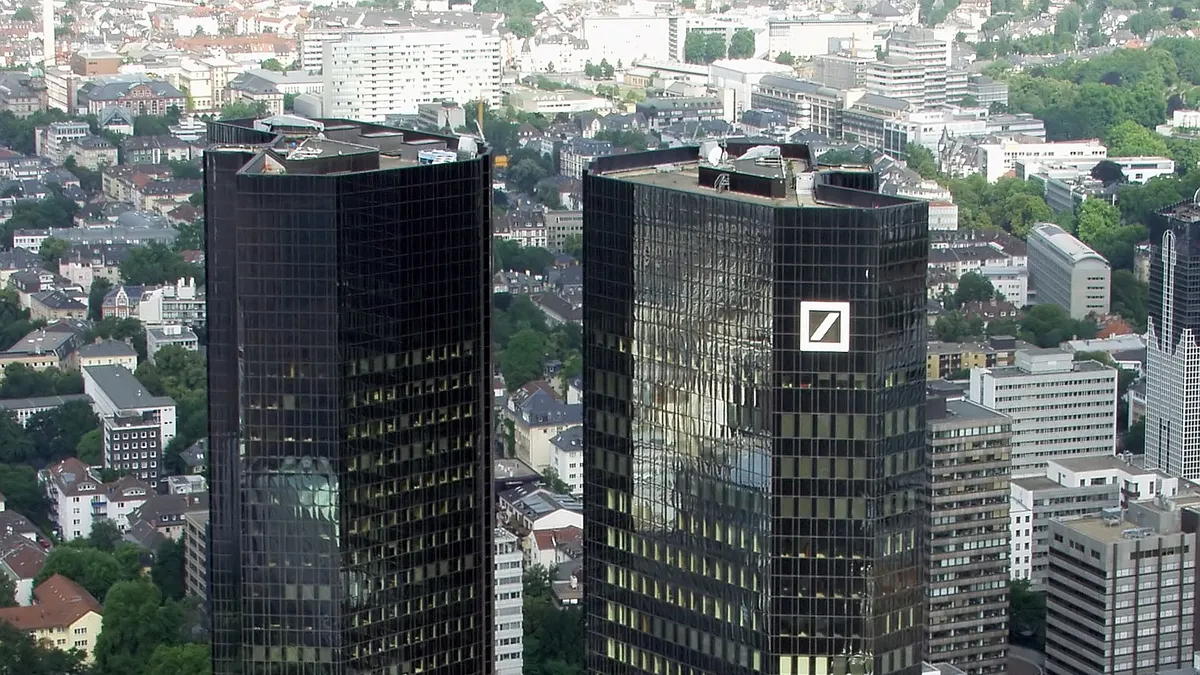
The essentials: More than 200 journalists published on Tuesday 17 November 2026 the first results of “Inside Deutsche Bank”, an investigation based on more than 15 million internal files leaked from Germany’s largest private bank. The reports say the bank repeatedly put business ahead of anti-money laundering and sanctions rules, and cover clients including Jeffrey Epstein, Russian oligarchs and companies owned by Donald Trump. Deutsche Bank says the cases date back years, in some instances two decades, and its shares fell 5.2% in early trading, Reuters reports.
What is the “Inside Deutsche Bank” leak?
The consortium describes it as the largest cache of internal documents ever leaked to journalists from inside a bank. The files include emails from senior executives, risk assessments, suspicious transaction reports and meeting minutes. According to the consortium, they come from some of the bank’s most sensitive units: anti-financial crime, sanctions monitoring, internal audit, and the teams that decide whether risky clients stay or go.
Two whistleblowers, whose identities are protected, copied the files. They gave them to Indian journalist Josy Joseph and South African journalist Khadija Sharife. A non-profit, Barracuda Media, was set up to analyse the data and share it with reporters from more than 50 media outlets. Partners include the Financial Times, The New York Times, Der Spiegel, Le Monde, ZDF and Der Standard, according to AFP.
The whistleblowers’ lawyer confirmed that they also passed material to the US Department of Justice, the US Financial Crimes Enforcement Network (FinCEN) and the UK tax authority, HM Revenue and Customs.
What do the files allege?
The consortium says the bank repeatedly missed warning signs of possible money laundering and sanctions violations, bent its own rules for powerful clients, and sometimes discovered serious failures years after suspicious money had passed through its systems. These are the journalists’ findings: Reuters says it could not immediately verify the reports.
| Subject | What the consortium reports |
|---|---|
| Jeffrey Epstein | Accepted as a client in 2013. The bank later identified nearly $600 million in suspicious transactions involving him and his network, more than twice the amount previously known |
| Russian oligarchs | Extensive files on clients including Oleg Deripaska and Roman Abramovich |
| Donald Trump | A May 2020 internal memo listed suspicious activity reports linked to two Trump companies with “Baku” in their names |
| Christian Sewing | Private exchanges paint a less favourable picture of the chief executive, the Financial Times reports, according to AFP |
What do the documents say about Trump’s companies?
According to the consortium’s reporting published by elDiario.es, a Deutsche Bank financial crime specialist wrote a memo in May 2020 listing suspicious activity reports tied to two Trump companies, THC Baku Services LLC and DT Marks Baku LLC. The transactions involved entities allegedly linked to money laundering networks known as the “Russian Laundromat” and the “Azerbaijani Laundromat”.
One payment of $141,261.82, sent on 28 April 2015 by a British shell company called Faberlex to THC Baku Services LLC, appears in both a Faberlex bank statement obtained by journalists and the bank’s internal memo. No evidence has emerged that Trump himself was compromised by his ties to Russia, the report notes.
Deutsche Bank declined to comment on Trump, saying banks are legally barred from discussing suspicious activity reports with US supervisors, or even whether they exist. Trump did not respond to the consortium’s questions.
How has Deutsche Bank responded?
“The matters … date back many years, in some cases as much as two decades,” the bank said in a statement quoted by Reuters. It says it reviewed these cases at the time with regulators, and that it invested €7 billion in its control systems between 2019 and 2025, according to AFP.
“Deutsche Bank is a different bank today,” it added, pointing to record profits in 2025 and in recent quarters. The bank also said that “any potential financial impact is not expected to be meaningful, if there is any impact at all”.
Why does it matter for the bank?
Christian Sewing, chief executive since 2018, has been credited with restoring the bank’s profits after years of scandals and fines. He promised a more stable bank, “a bit more boring”, in his words as recalled by the consortium. But compliance problems have resurfaced from time to time, Reuters notes, most recently when US Department of Justice files released earlier in 2026 detailed the bank’s relationship with Epstein.
The next questions are whether regulators in Germany, the US or the UK open new inquiries on the basis of the files, and whether the share price recovers once markets digest the first revelations.