Chase outage: a software bug slowed payments at several US banks and Zelle
A software bug at JPMorgan Chase delayed transactions on 16 November 2026, with knock-on effects at other banks and Zelle. Chase rules out a cyberattack.
Published
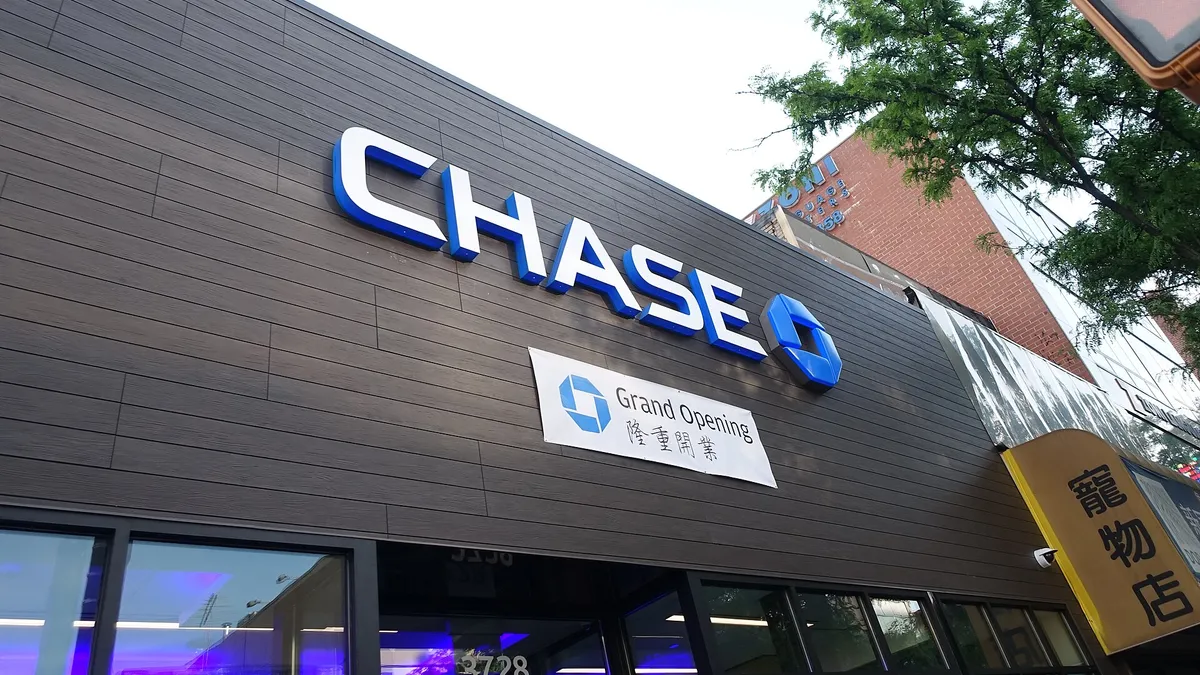
The essentials: Customers of JPMorgan Chase struggled to check balances, move money and send Zelle payments on Monday 16 November 2026. Chase blamed a software bug in an on-premise hardware system and said it was not a cyberattack. Other banks saw delays only on transactions involving Chase, and a Chase spokesperson said around 6:30pm Eastern time that transactions were “now posting normally”.
What went wrong at Chase?
The problems began on Monday morning, according to a source quoted by NBC News, and complaints grew through the afternoon. As of 2pm Eastern time, nearly 4,800 users had reported problems with Chase on the outage tracker Downdetector, more than for any other bank, CBS News reports.
Customers said they could not view balances or complete transfers and wire payments. Some saw the message: “Some services aren’t available. We’re working on them. Please try back later.” CBS News spoke to a customer in Dallas who could not deposit a check at a branch.
“JPMorgan Chase has experienced a temporary issue related to a software bug in an on-premise hardware system — it is not cyber-related,” bank spokesman Joe Evangelisti told The Associated Press. Chase also said customers kept access to their accounts and funds, but that some transactions were taking longer than usual.
Why were other banks affected?
The problem appears to have spread “through their shared payment networks”, Mike Chapple, an IT expert at the University of Notre Dame, told CBS News. Chase said the problem was its own. “This is not a systemic issue — other banks may have been impacted by slowness in transactions only to the extent that they were a party to a transaction with us,” Evangelisti told the AP.
Downdetector also showed spikes in complaints for Bank of America, U.S. Bank, Wells Fargo, Capital One and Truist, CBS News reports. The banks’ answers varied:
| Institution | What it said |
|---|---|
| Bank of America | Its systems were “operating normally” (CBS News) |
| U.S. Bank | Not directly affected, but Zelle payments with other banks could be delayed (AP, CBS) |
| Capital One | Not affected and operating normally (CBS, NBC) |
| PNC | No direct impact (NBC News) |
| Zelle | “Zelle is not down”, but problems at banks could delay payments (NBC News) |
Zelle has no accounts of its own: payments go through participating banks. Its operator, Early Warning Services, is owned by banks including JPMorgan Chase, Bank of America, Wells Fargo and U.S. Bank.
Is everything back to normal?
Chase said around 6:30pm on Monday that transactions were posting normally, NBC News reports. By early Tuesday 17 November, Downdetector showed service back to normal at the banks and at Zelle, according to CBS News. It is not known how many of Chase’s customers were affected. NBC News puts the bank’s US customer relationships at about 94 million.
What should customers check now?
Experts quoted by CBS News suggest checking that payments made on Monday went through, and keeping screenshots of failed transactions or error messages. Kayne McGladrey, a senior member of the Institute of Electrical and Electronics Engineers (IEEE), advised customers to ask their bank to reverse any fees caused by the outage. McGladrey also warned against unsolicited emails about the outage, which may be phishing attempts. Information should come from the bank’s official channels.
Is it linked to the other outages this week?
There is no evidence of a link, NBC News says. The Chase incident followed a global Microsoft outage affecting Outlook and Teams, and a router failure that forced a nationwide ground stop of US flights on 13 November. Chapple sees a common thread nonetheless: “the complexity and fragility of the systems that we depend on every day”, he told CBS News.
The outage also came the day before a scheduled nationwide test of the Emergency Alert System, which FEMA says involves no blackout.