Clocks fall back on November 1: why the push for permanent daylight saving time stalled
Most of the US sets clocks back one hour at 2 a.m. on Sunday, November 1, 2026. A House-passed bill to end the switch is stuck in the Senate.
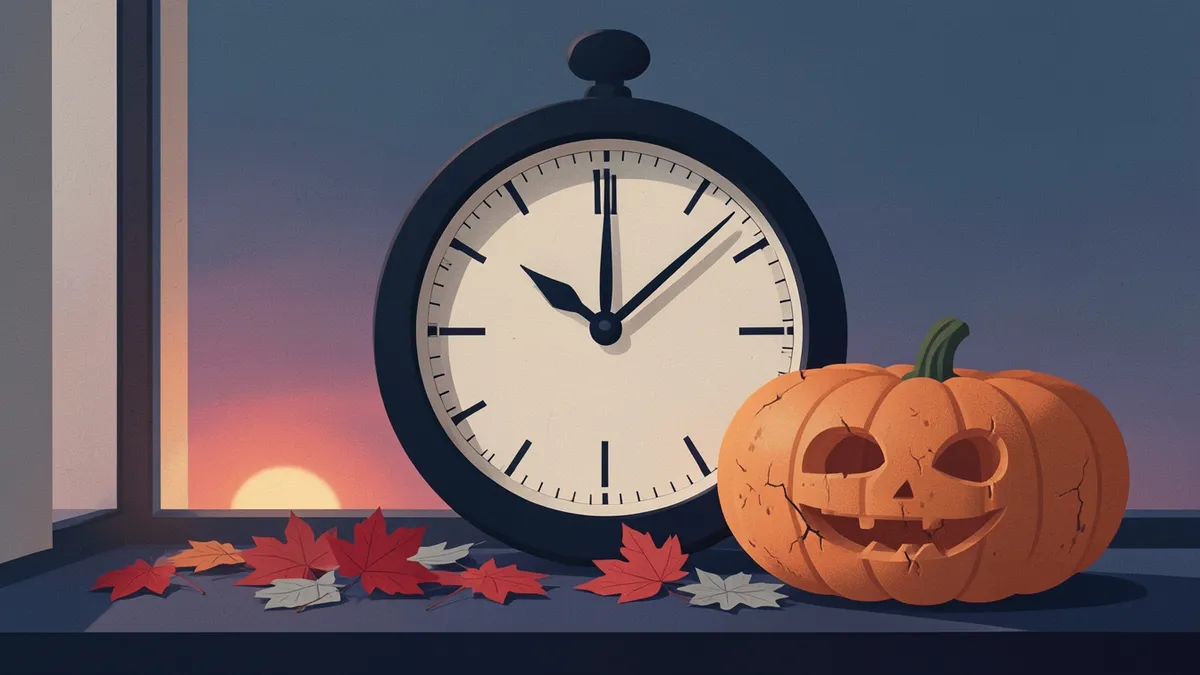
The essentials: Daylight saving time ends at 2:00 a.m. local time on Sunday, November 1, 2026, when clocks go back to 1:00 a.m. That’s the night after Halloween, so trick-or-treat night gets an extra hour. A bill to stop the twice-yearly switch passed the House in July, but it is stuck in the Senate, so the change will go ahead as usual.
When exactly do the clocks change?
Clocks fall back one hour at 2:00 a.m. local time on Sunday, November 1. Under federal law, daylight saving time ends on the first Sunday in November, ABC News explains. This year Halloween falls on Saturday, October 31, so the switch happens in the early hours that follow.
Most phones and computers update by themselves. Mornings will get lighter and evenings will get dark sooner.
Not everyone changes. Hawaii and most of Arizona stay on standard time all year, according to TIME and ABC News. So do American Samoa, Guam, the Northern Mariana Islands, Puerto Rico and the US Virgin Islands. The Navajo Nation, in parts of Arizona, does observe daylight saving time, ABC News notes.
| Date | What happens |
|---|---|
| July 2026 | House passes the Sunshine Protection Act, 308 to 117 (ABC News) |
| October 2026 | Majority Leader John Thune says there is “no clear path forward or consensus” (POLITICO, quoted by TIME) |
| Saturday, October 31 | Halloween |
| Sunday, November 1, 2:00 a.m. | Clocks fall back to 1:00 a.m. standard time |
| Week of November 9 | Senate scheduled to return (iHeart, citing The Hill) |
| Mid-December | Current session of Congress expected to end (iHeart) |
What is the Sunshine Protection Act?
The bill would make daylight saving time permanent, so clocks would never fall back. States could still choose to stay on standard time all year, TIME explains. Today federal law works the other way round: states can opt out of daylight saving time, but they cannot stay on it all year.
The House passed the bill in July with votes from both parties, 308 to 117. It was sponsored by Rep. Vern Buchanan of Florida, ABC News reports. During the House debate on July 14, Florida Rep. Gus Bilirakis argued that “having more predictable daylight hours is a practical improvement that benefits workers, businesses, and visitors alike”.
Why is it stuck in the Senate?
The Senate needs 60 votes to move the bill forward. Majority Leader John Thune has said he doubts it can get there, iHeart reports. In October he told POLITICO that “there’s no clear path forward or consensus”, TIME notes.
Sen. Tom Cotton of Arkansas has criticized the proposal. Opponents say permanent daylight saving time would mean very late winter sunrises in parts of the country, so people would set off for school and work in the dark.
President Donald Trump backs the bill and has called it a potential “WIN for the Republican Party”, iHeart reports. According to TIME, he accused Cotton of “holding up” the bill and urged supporters to “call Tom on his cellphone”.
Timing also counts against it. The Senate is not due back until the week of November 9, after the clock change, and this Congress is expected to sit only until mid-December, iHeart notes.
The US has tried this before. During the 1970s oil crisis, it briefly ran daylight saving time all year round. Congress dropped the experiment in 1974 after parents objected to children going to school in the dark, ABC News recalls.
Is standard time better for your health?
Sleep specialists generally prefer standard time. The American Academy of Sleep Medicine opposes the permanent daylight saving bill, TIME reports. Its spokesperson, sleep physician Andrea Matsumura, says: “Typically, moving to Standard Time is actually in sync with our circadian rhythm.” She adds that “most people have a fairly easy transition” in the fall. Losing an hour of sleep in March is harder.
Psychiatrist and sleep medicine physician Alex Dimitriu calls the switch “an hour of jet lag”. The two doctors suggest:
- keep your usual sleep schedule;
- get daylight soon after waking up;
- avoid caffeine late in the afternoon;
- move a little in the morning, for example with a walk;
- avoid eating late in the evening.
Does the time change make roads more dangerous?
Driving can get harder in the first days after the switch. In Southern California, the California Highway Patrol and AAA have noticed more drowsy drivers once it gets dark earlier, ABC7 Los Angeles reports. Low sun can also blind drivers heading east or west at rush hour. “A lot of drivers do tell me that sunlight played a factor in the crash,” CHP Officer Andre Ortiz told the station.
His advice: wear sunglasses, use the sun visor, leave more space behind the car in front, slow down and keep your windshield clean. AAA’s Kandace Redd adds a simpler rule: “never drive when you’re tired.”
This article was prepared with the help of AI tools from the sources listed above, then reviewed by our editors before publication. Read our editorial policy